Re-building a national treasure
The Irish National Lottery is played by 84% of adults, but its business had stayed rooted in in-store sales while online gambling grew rapidly around it. I led product design on an ambitious 6 month project to redesign every aspect of the lotto’s online experience. I was responsible for a team of three designers, made trickier when the onset of COVID-19 forced our team to transition to fully remote work only one week in.
The impact:
153,000+ new online player accounts registered in the first year following the redesign.
66% increase in digital channel share, growing from 9% to ~15% of total sales.
€175M+ in digital revenue generated, well beyond initial projections.
The problem
The project touched nearly every part of the Lottery's business, so before any design work started, I ran 14 stakeholder interviews to understand what each team needed and expected. The discovery phase was a high-intensity effort that allowed me to audit the existing work, review the competitor landscape, and explore the huge amount of research the National Lottery has amassed. Three insights stood out to me:
Users felt playing online lacked “buzz” and excitement
People didn't trust the platform because they'd never heard of anyone actually winning through it and the language on outcome screens was vague
There was limited awareness of the good causes the Lottery funded and it greatly improved people’s perception when told
I used that research to define 8 design principles that the whole team could use to stay aligned, especially useful when decisions stalled.
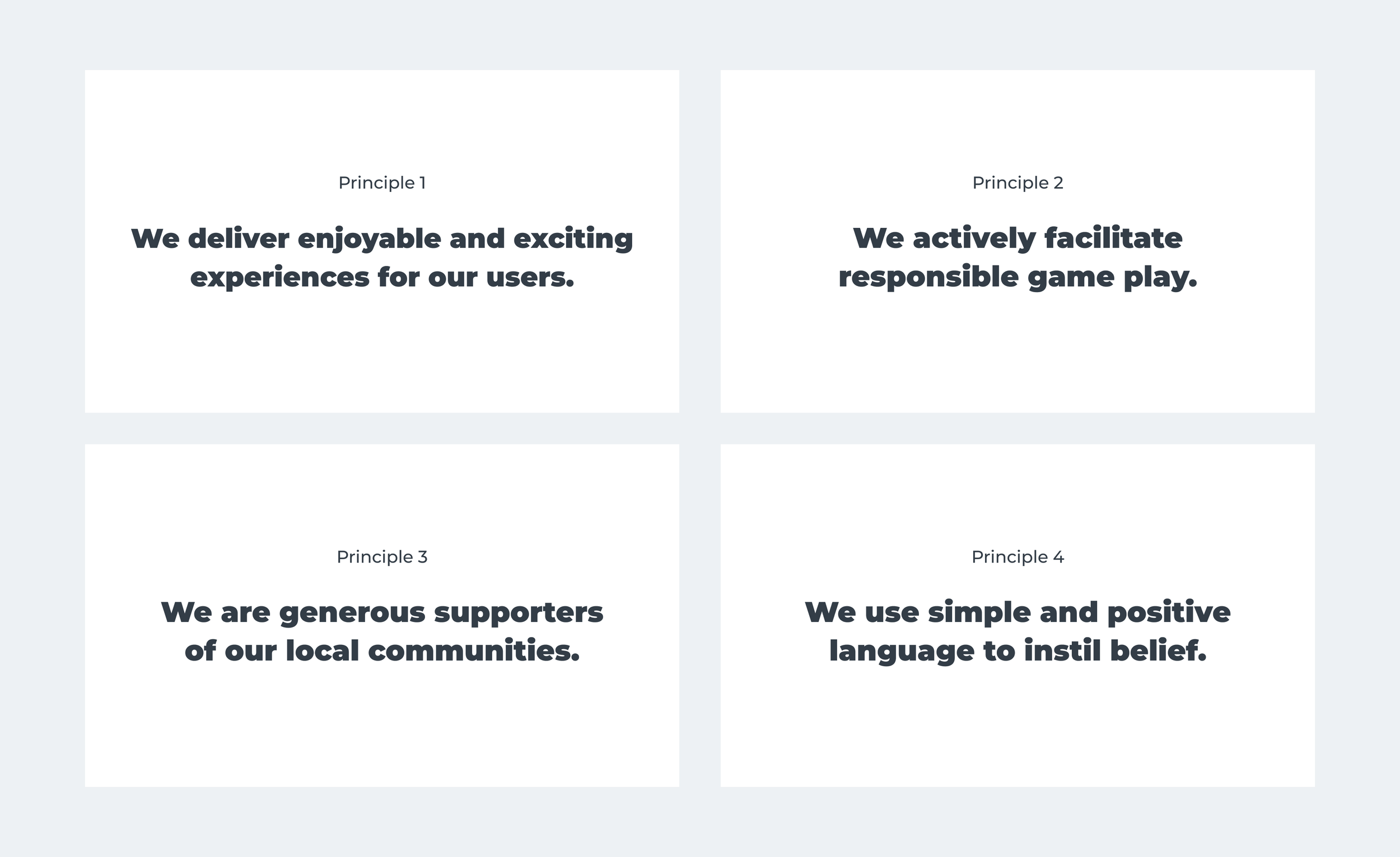
Four of the design principles I created to anchor this project
Getting the experience right
The project consisted of 12 sprints, each one beginning with a technical discovery session, where we scoped the system requirements, refined flows, and mapped out edge cases. Results Checking was the single most common journey on the site, making up 78% of all traffic, so I’ll focus on it for this case study. The goals were to:
Simply the experience - decrease cognitive load and limit navigational steps
Drive registration - convert results checking in-store players to online players
The existing page buried the one thing everyone came for, the winning numbers, below the fold, while cluttering the space above it. People described the page as "messy" and said they regularly missed basic information like the raffle number. I rebuilt the hierarchy around the single primary task, cutting anything competing with it and making sure tables worked properly on mobile.
Once that clutter was gone, I had space to do something more strategic: use the newly clear layout to drive registration. After each draw, I alternated between two message types, one about the practical benefits of playing online, like never losing a ticket, and one built around an online winner’s story. That combination of a cleaner core task and purposeful messaging next to it is what moved people from checking results in-store to creating an online account.
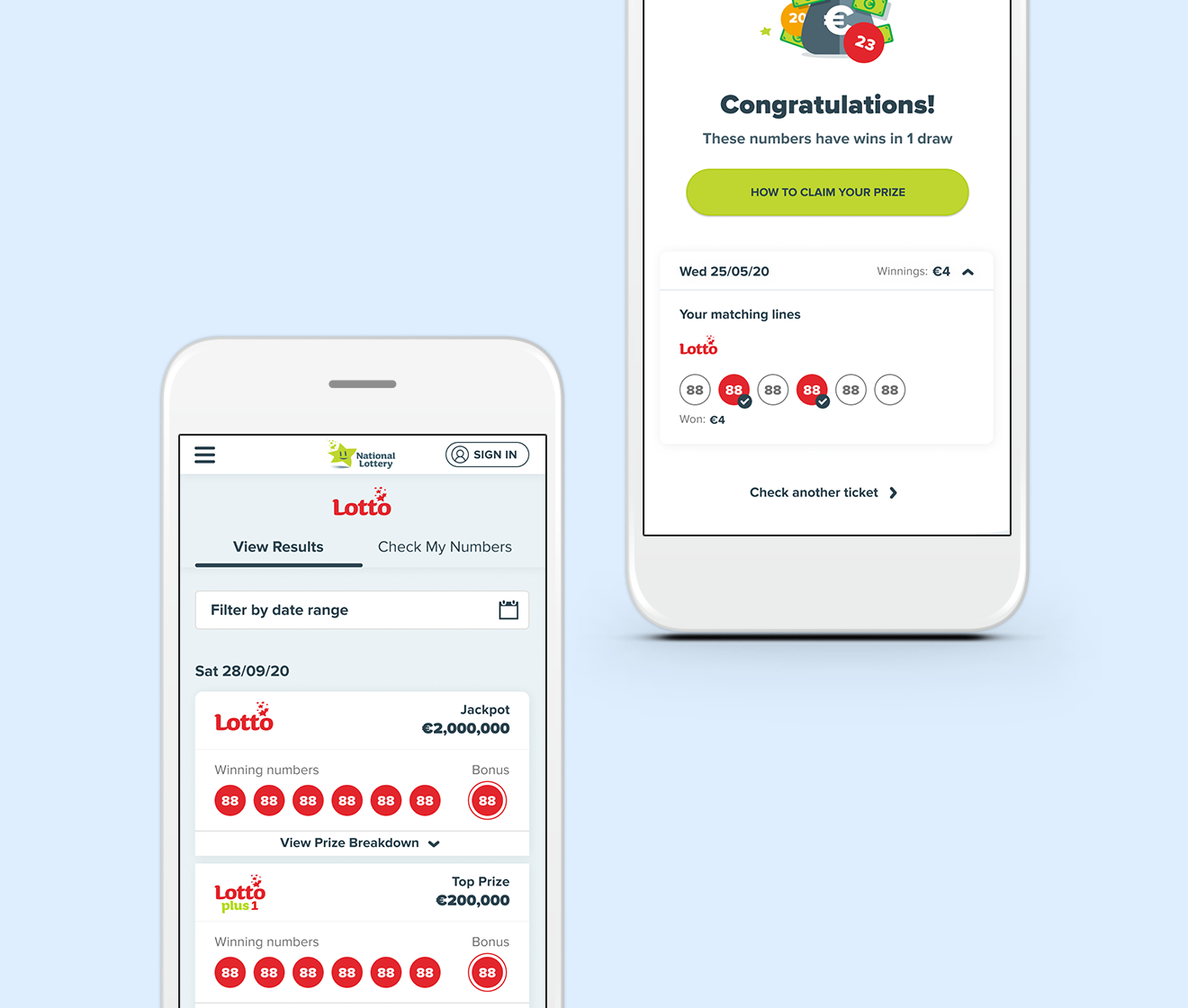
The existing results page (left) and my redesign (right): winning numbers now lead, with the prize breakdown hidden in a dropdown.
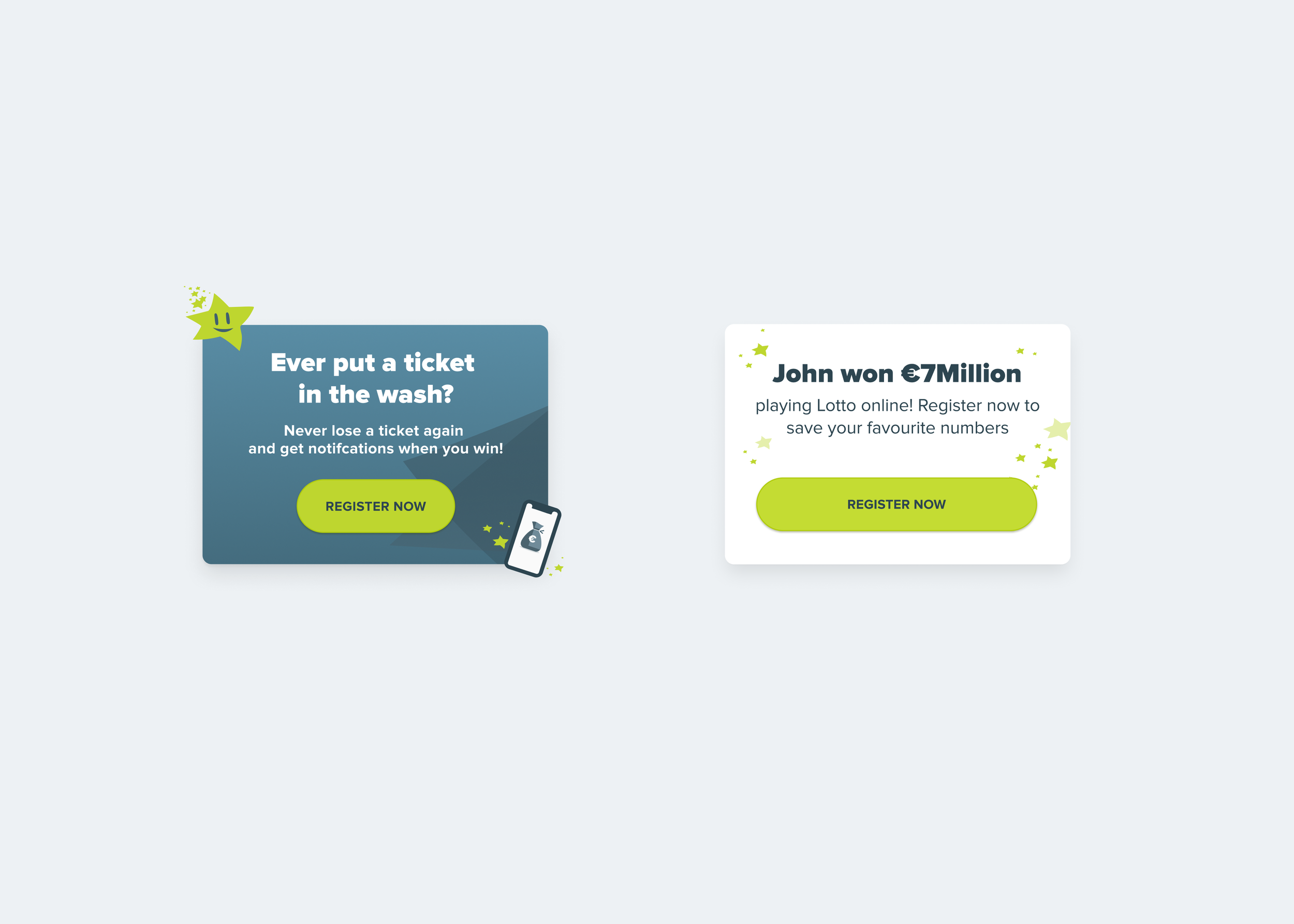
Registration prompts shown after each draw: a practical benefit message and a winner story.
Building the system behind it
Twelve sprints across a platform this size meant the same components would be needed again and again, so I built a design system alongside the product. It covers typography, colour, the Lottery's signature ball and line components, ticket checking, tabs, dropdowns and shadows. Each component was documented with states and usage guidance, so designers and developers could build without needing me.
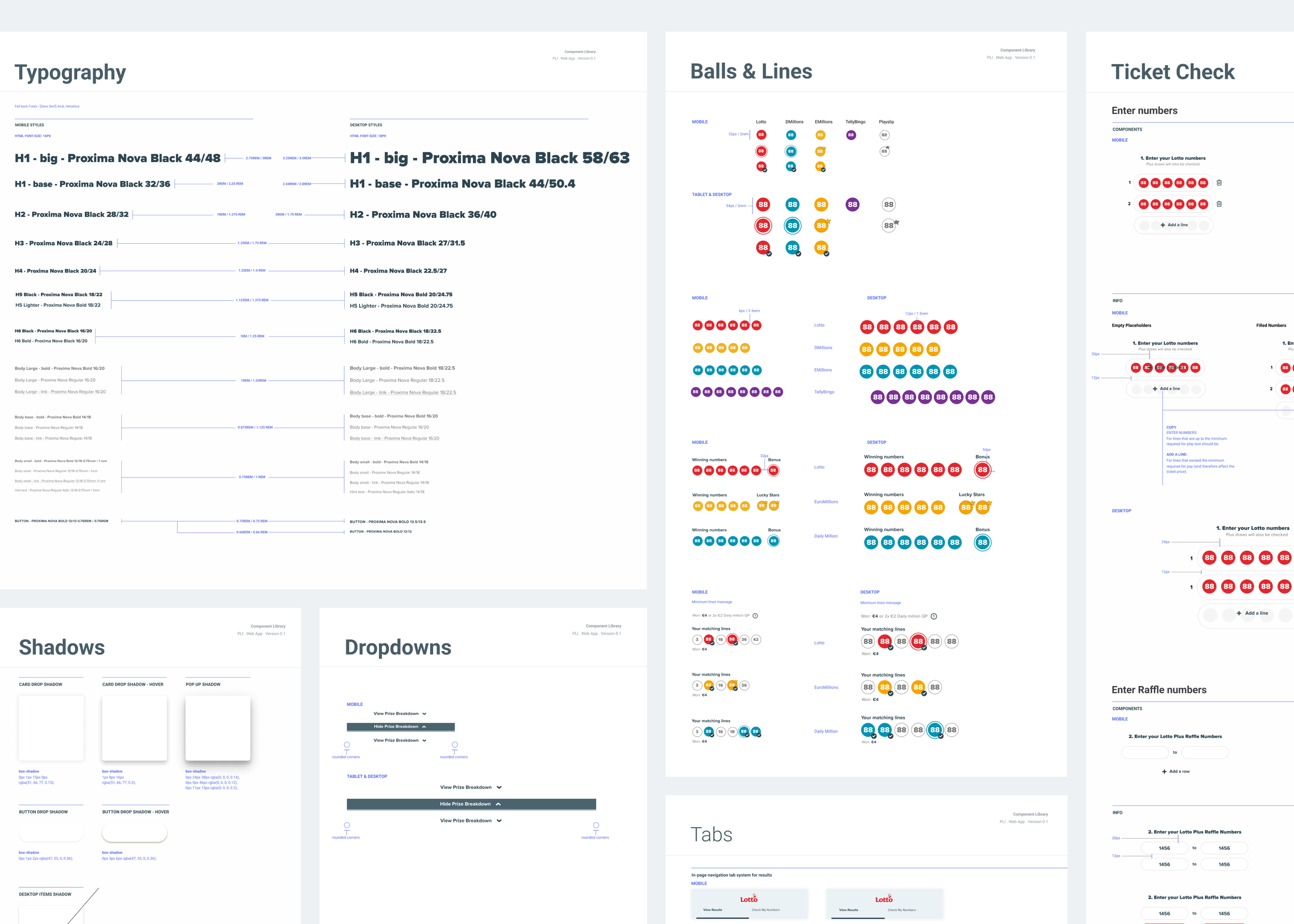
The design system I created for the platform: typography, balls and lines, ticket check, shadows, dropdowns and tabs.
An unexpected result
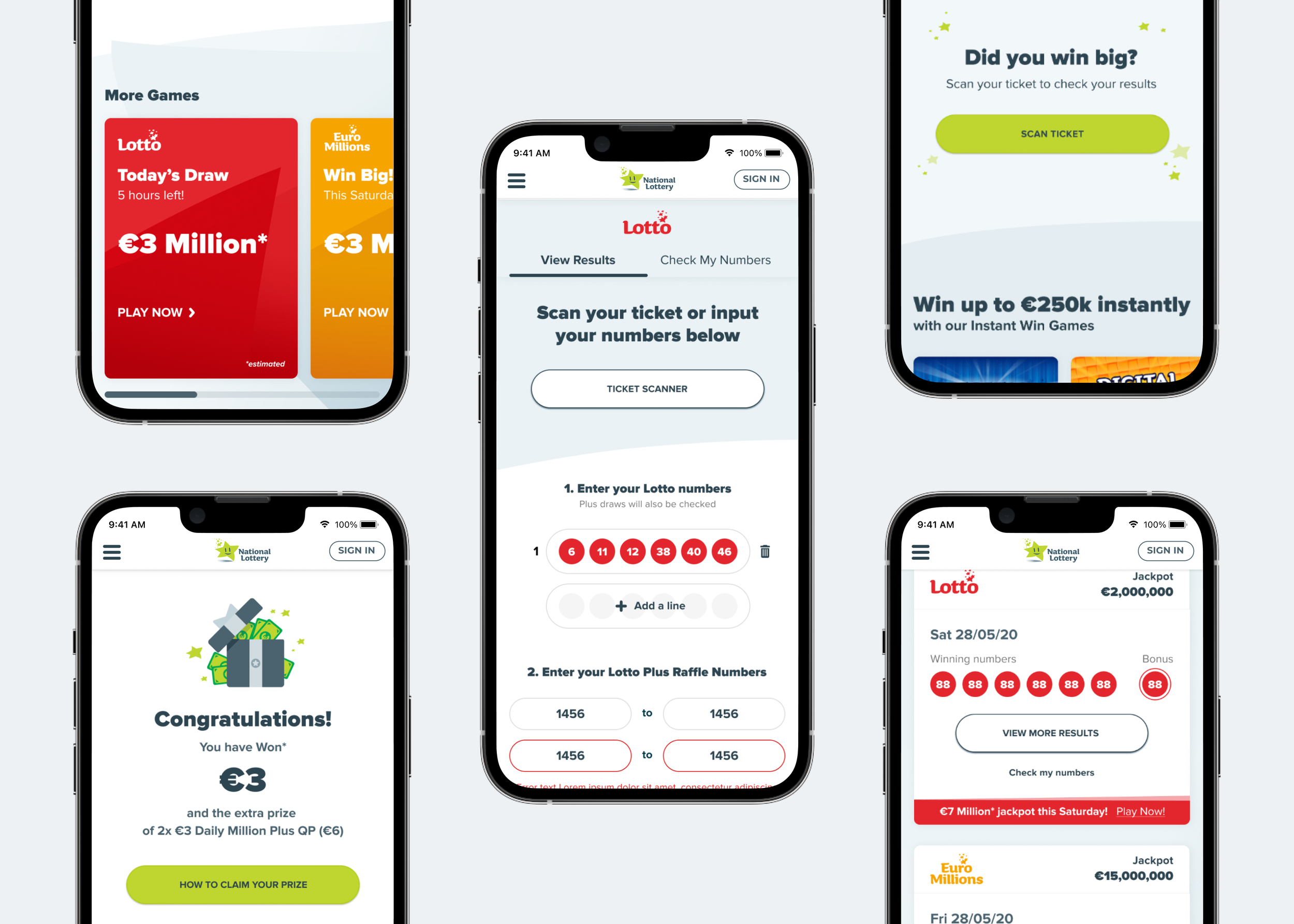
While building trust into the outcome screens, I designed win and loss states with clear, celebratory language and made sure claim details were obvious. But testing surfaced something I didn't expect: because results appeared almost instantly, people didn't believe them. The speed itself read as untrustworthy.
I added a loading screen and, based on further testing, made it even slower than felt natural to design. That gave me space I hadn't had before: a moment to reinforce the good causes the Lottery funds, right before someone saw their result. Slowing the experience down, something that would normally read as a UX mistake, was exactly what made people trust it more.
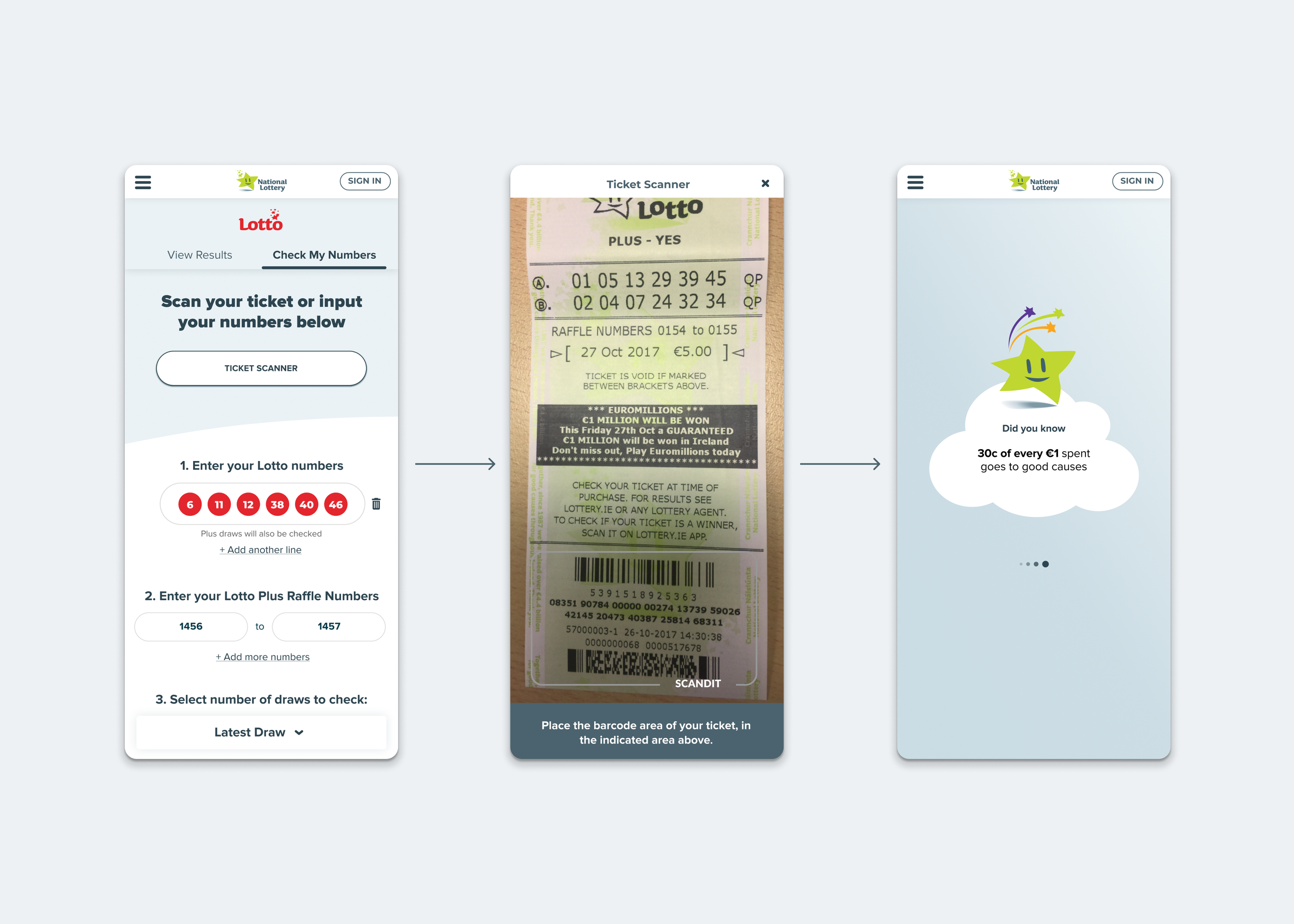
The results journey with the added loading screen
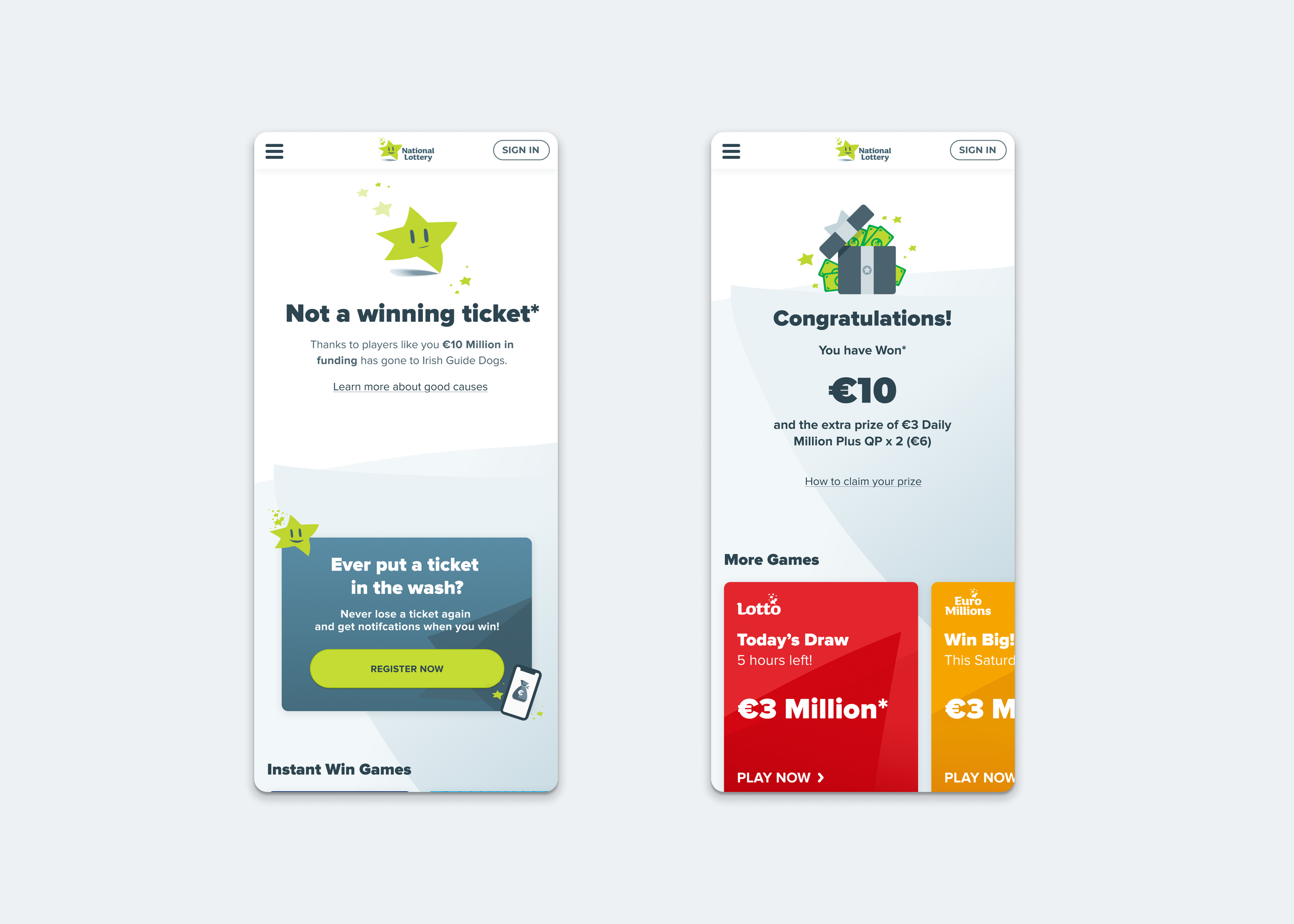
Prize screens
Learnings
Sometimes the fix is counterintuitive
Good UX instinct says remove friction wherever you find it. This project taught me to test that instinct rather than trust it by default, since the "obvious" improvement, instant results, was actually undermining the thing we needed most: trust.
Alignment artefacts pay for themselves under pressure
With COVID forcing the team fully remote a week into an already tight timeline, the design principles I built early on did more than align the team, they kept decisions moving without me needing to personally settle every disagreement.