Setting new standards for financial confidence with AI
I led the design of the Financial Test Suite, a tool that continuously monitors a company's finances and flags anomalies before they become real problems. As part of this I designed Financial Test Agent, an AI canvas that lets finance teams build and edit their own monitoring tests in plain language.
The impact
Currently in Early Access, initial deployment indicates an 84% reduction in manual testing time.
Following its debut at Workday Rising, a record 61 customers, including Netflix and Salesforce, asked to join our design partner group to develop this product.
Early feedback has been highly positive, with one customer calling it "an absolute game changer".
The problem
No company can manually verify that every transaction is correct, non duplicate, and free from fraud, but that's exactly how most finance teams operate. Checking happens reactively, at month end or audit time, by people manually comparing data spread across systems that don't talk to each other. By the time an error surfaces, the money has usually already moved.
Racing the clock
The project started as a few quick visuals for a leadership meeting on what automated financial monitoring could look like. Within days it became a 7-week sprint to launch at Workday Rising, with no time for the discovery or wireframing I'd normally do. To mitigate this, I jumped on a call with my PM and designed content maps. I then fed those maps into Gemini to generate realistic data, which let me build believable, high fidelity screens fast. From there, I used Gemini as a synthetic research partner to test those screens, giving me enough signal to deliver a credible hero use case for the conference.
From content map to an initial high fidelity design within the first 24 hours on the project
Defining AI interactions
One of the biggest questions we faced was where to introduce AI in this product. Across years of Workday research, one theme kept repeating: implementation and setup are where products die, with customers getting buried in configuration long before they see any value. As a team we agreed that’s where AI could do the most good and focused our efforts.
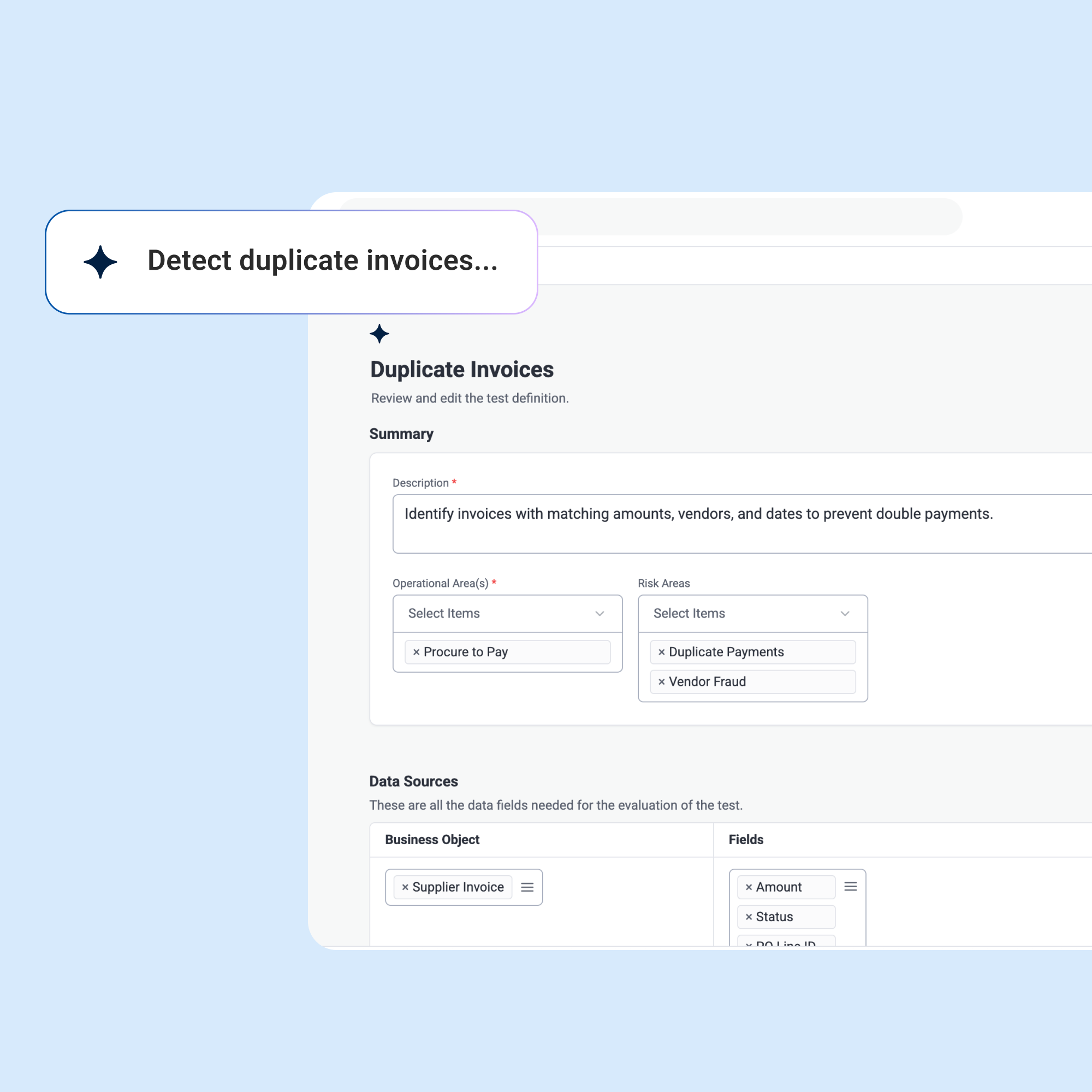
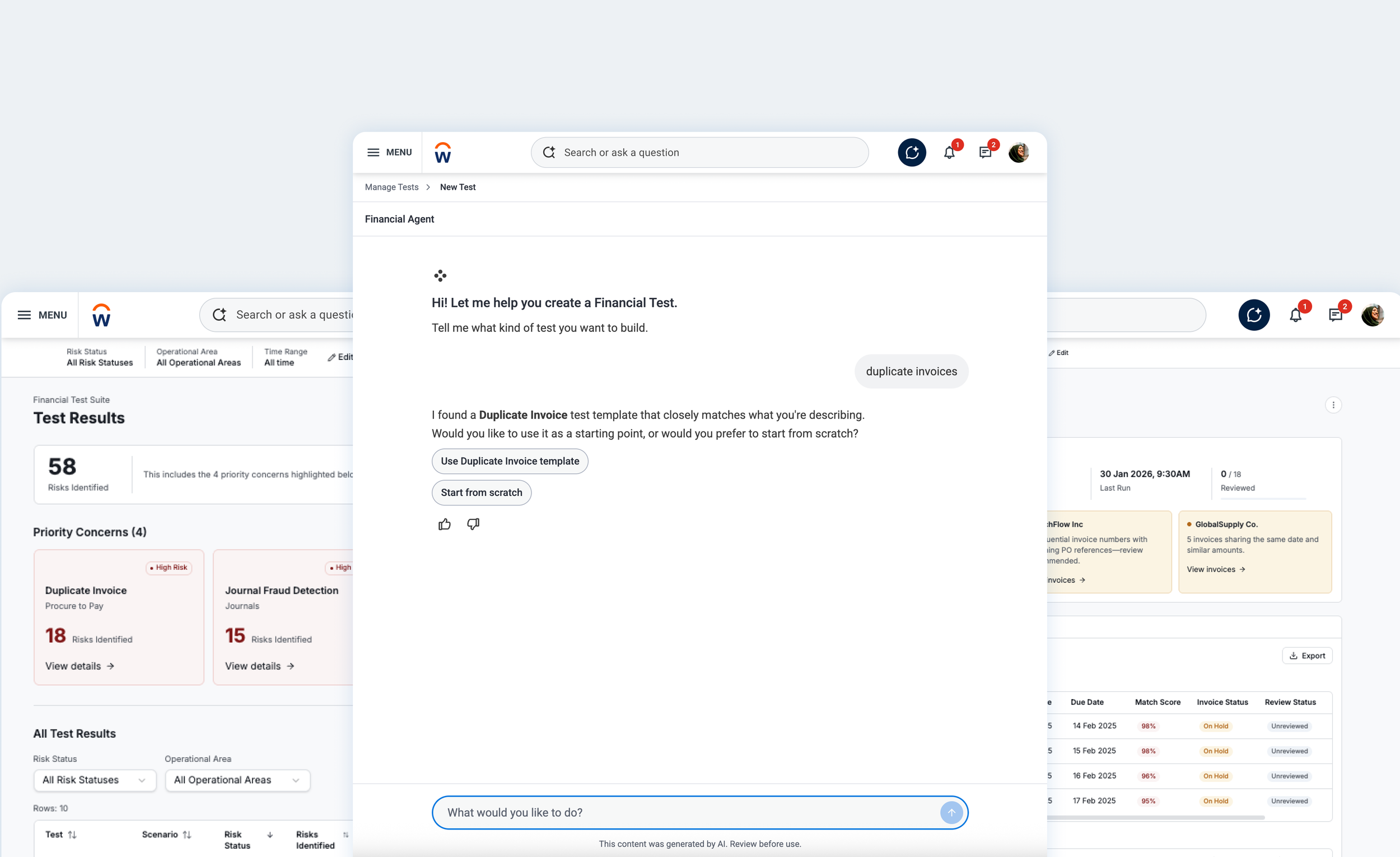
Rather than default to a standard chat interface, I designed a split screen canvas. The left pane handles the conversational request, like asking the system to scan for duplicate invoices. The right pane generates the structured output, using the same UI components finance teams already use throughout Workday. Crucially, that output isn't just familiar, it's fully editable, so the user can go straight in and finesse the details themselves.
The canvas interface showing the chat on the left and the structured test grid on the right
Buying time to get it right
Once the initial designs were in front of senior stakeholders, the feedback was consistent: good, but not enough AI, why not make the whole thing chat? My instinct was that reducing the product to chat would trade away the trust I'd just designed for and provide limited productivity gain, if any. With the conference deadline looming, I didn't have time to test that properly, so I held the core pattern and added a handful of smaller AI forward touches to answer the feedback without compromising the core structure.
Once we moved into Early Access testing after Rising, I had the room to test it properly. I prototyped a chat-first version of "View Details" and tested it against the tabular version with actual Financial professionals. The reaction was immediate. One professional put it bluntly: "Take me right to the data, I don't need the chatty, make me feel like I have a friend." That settled it. ‘View Details’ now opens directly into a filterable table with drill-down, with chat repositioned as a launcher and explainer rather than a destination.
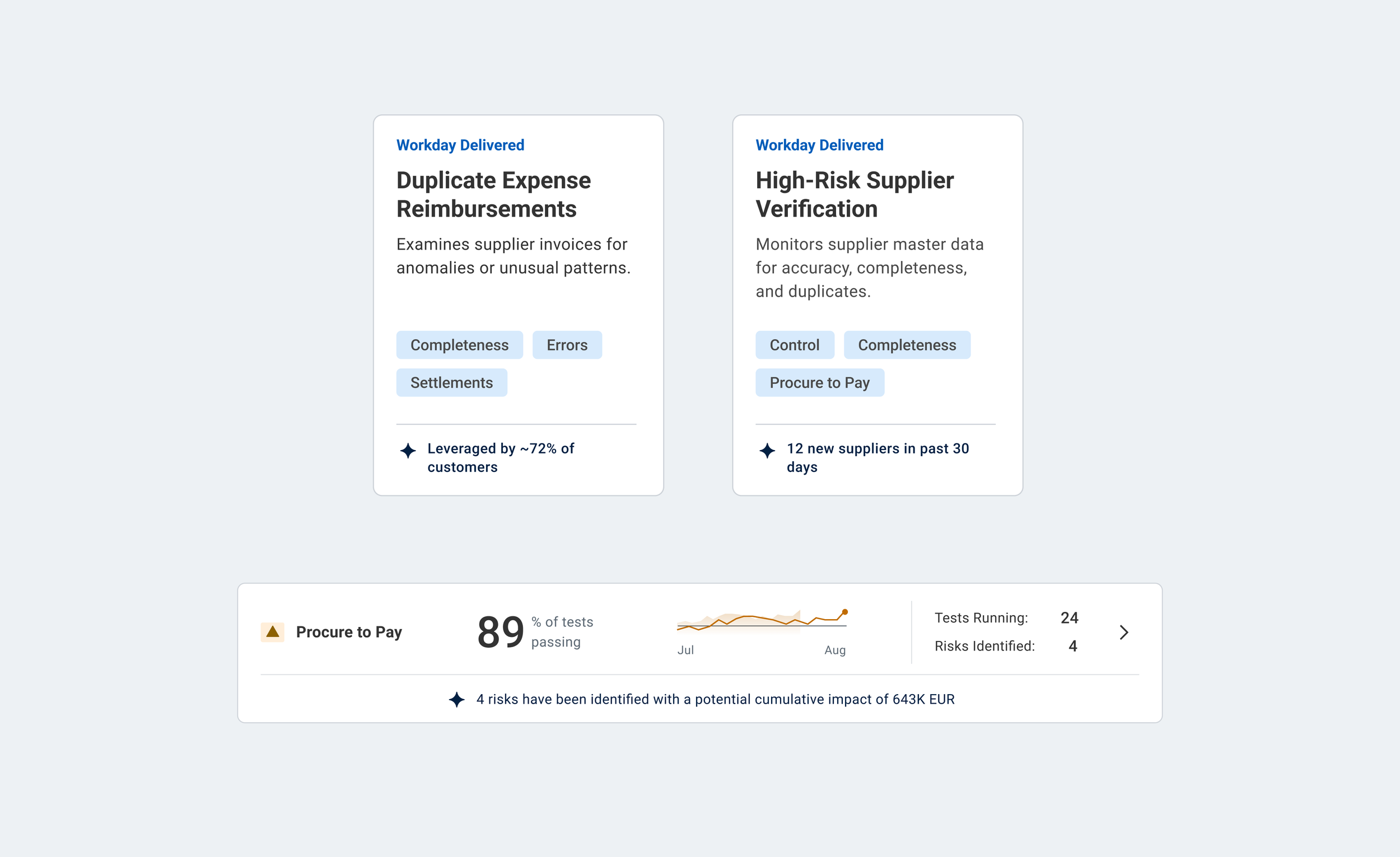
Components with added AI touches to answer the feedback without compromising the core structure.
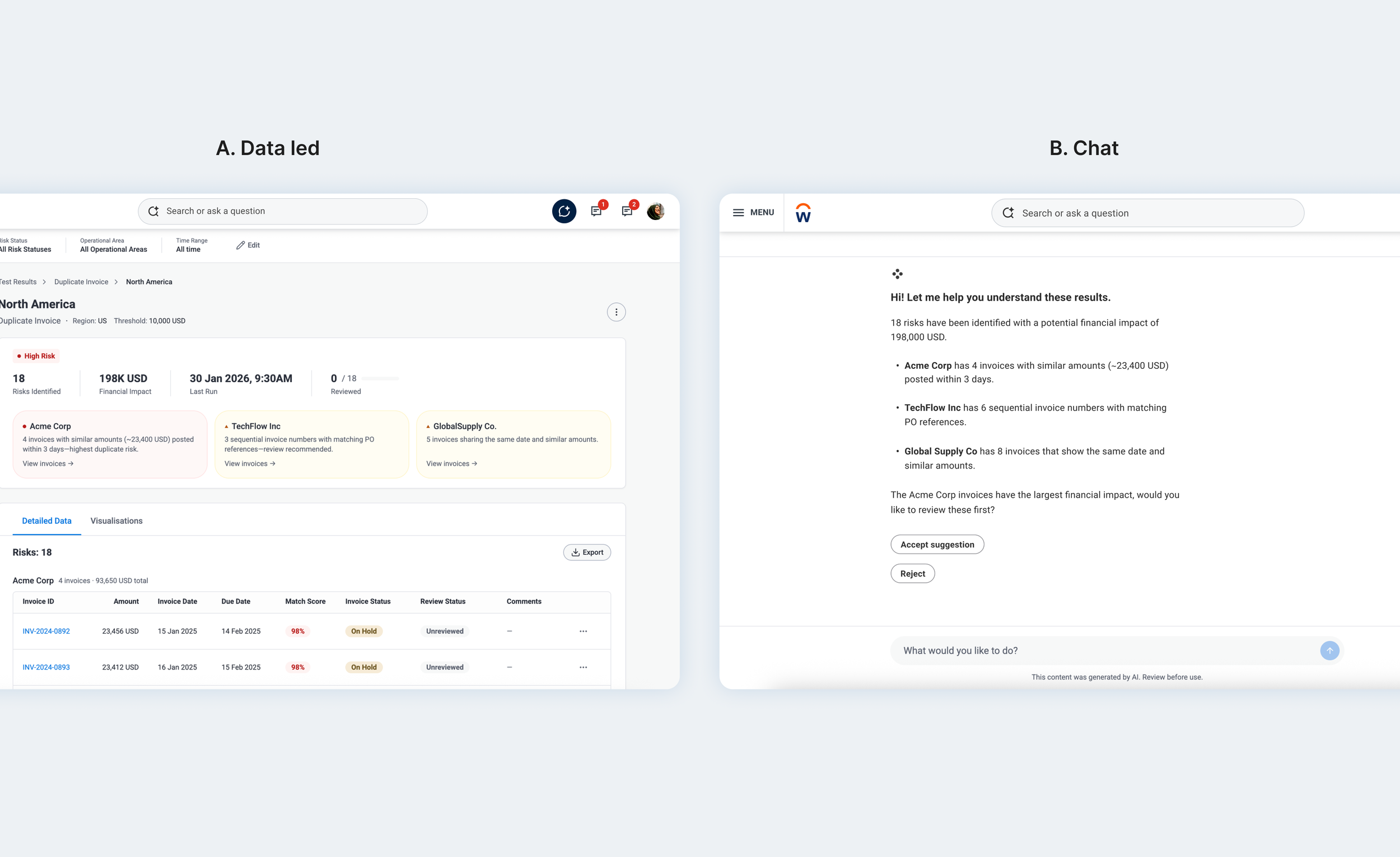
Data first results vs. chat first results
Designing for trust
During user testing every participant described themselves, unprompted, as a "control freak". They needed to see the actual transaction, not be told about it, before they'd trust a flag. So every anomaly the Agent surfaces shows its source evidence, like the specific invoices involved, and the system never auto-corrects anything. Flagged items are put on hold, pending human review. That’s not to say we won’t have auto-remediation in the future, but at this point in time we are building trust in the system and its accuracy, and enabling our system to continue to learn off of real data without permanent consequences. As one customer described, they want the Agent to build credibility "like a co-worker".
The detailed data is always available to view
Learnings
Familiarity builds trust
Financial professionals think in grids and ledgers, not conversation. I anchored the AI experience in structured, editable artefacts everywhere it showed up, the canvas, the audit trail, how results get routed, because the most effective AI interface respects the mental model people already have.
Evidence over instinct
Years of working with these users gave me strong convictions, and when new leadership pushed back, my first instinct was to defend them outright. Instead, I bought time, held the line just enough to hit the deadline, and let user testing settle it once I actually had room to test.